

Every organization depends on information. Whether a sole proprietor operating a local business, a growing startup, a regional manufacturer, or a multinational corporation employing tens of thousands of people, success depends on the ability to communicate accurately, consistently, and effectively. Technical communicators are the professionals who transform complex information into content that can be understood and used by specific audiences. Their work spans corporate communications, marketing communications, and technical communications, ensuring that employees, customers, regulators, investors, partners, and the public receive the information they need to make decisions and perform tasks successfully.
Corporate Communications
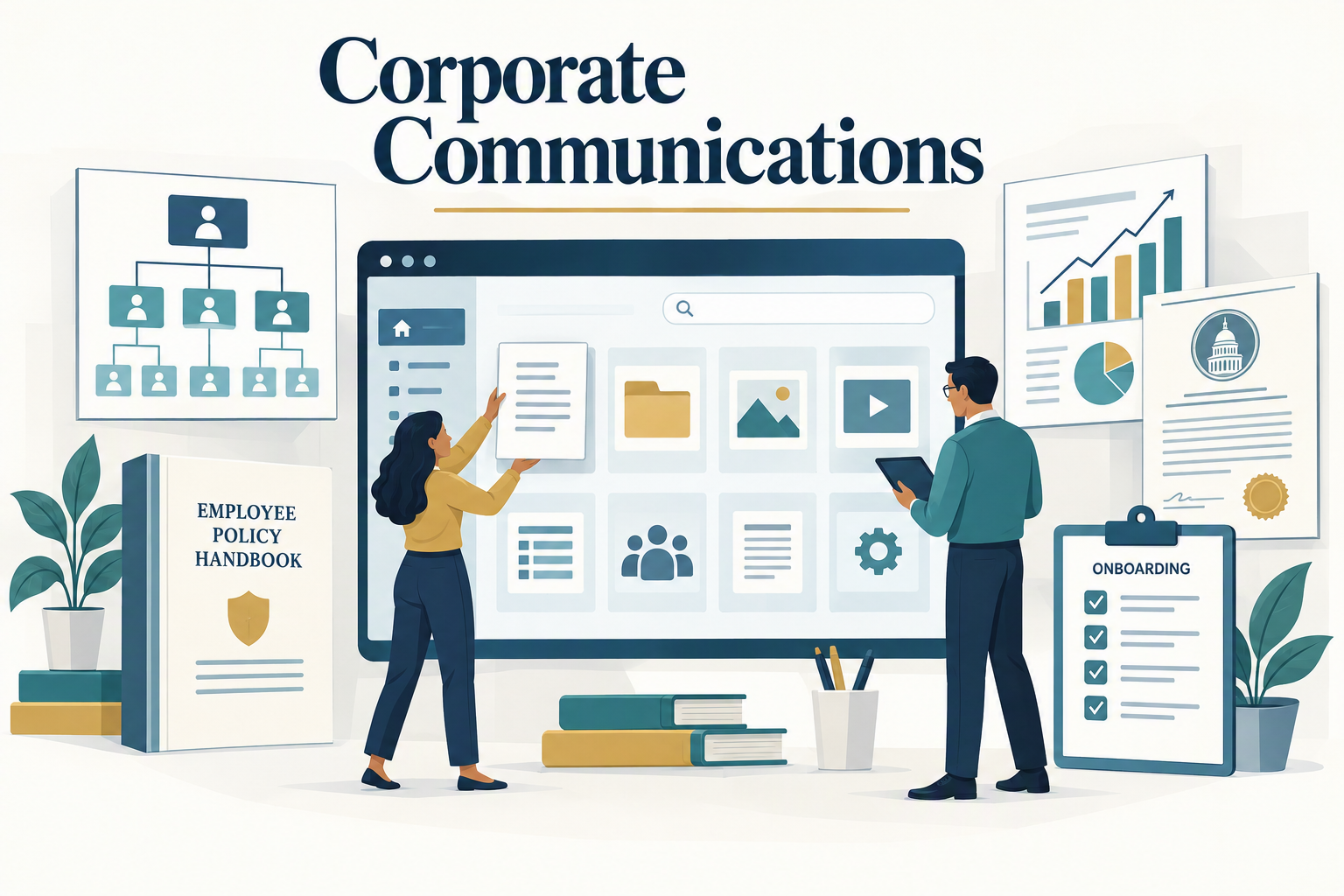
Corporate communications focuses on how an organization communicates with itself and with key stakeholders. Technical communicators working in this area develop and maintain the documents and information systems that support organizational structure, governance, compliance, and operations. Their responsibilities may include documenting organizational design, reporting relationships, corporate policies, employee handbooks, standard operating procedures, and governance frameworks. They often assist with incorporation documents, annual reports, government filings, regulatory disclosures, and executive communications.
Within human resources, technical communicators help create onboarding programs, orientation materials, benefits documentation, performance management guides, and employee training resources. They work closely with leadership, legal counsel, finance departments, and human resource professionals to ensure that information is accurate, compliant, and understandable. In larger organizations, these communicators may also manage enterprise knowledge bases, intranet content, and internal communication strategies that help align thousands of employees around common goals and expectations.
Marketing Communications
Marketing communications concentrates on creating awareness, interest, trust, and engagement among customers and prospects. Technical communicators who support marketing functions combine clear writing with audience analysis to develop content that communicates value while maintaining factual accuracy. Their work may include website content, social media campaigns, brochures, advertisements, press releases, case studies, white papers, newsletters, presentations, and public relations materials.
In today’s digital environment, marketing communicators manage messaging across multiple channels, including corporate websites, social networks, email campaigns, video platforms, print publications, radio, television, trade shows, and industry events. They collaborate with marketing strategists, graphic designers, sales teams, and product specialists to ensure consistent messaging across all customer touchpoints. Effective marketing communication helps organizations distinguish themselves from competitors, strengthen brand identity, and maintain productive relationships with customers, shareholders, business partners, and the broader marketplace.

Technical Communications
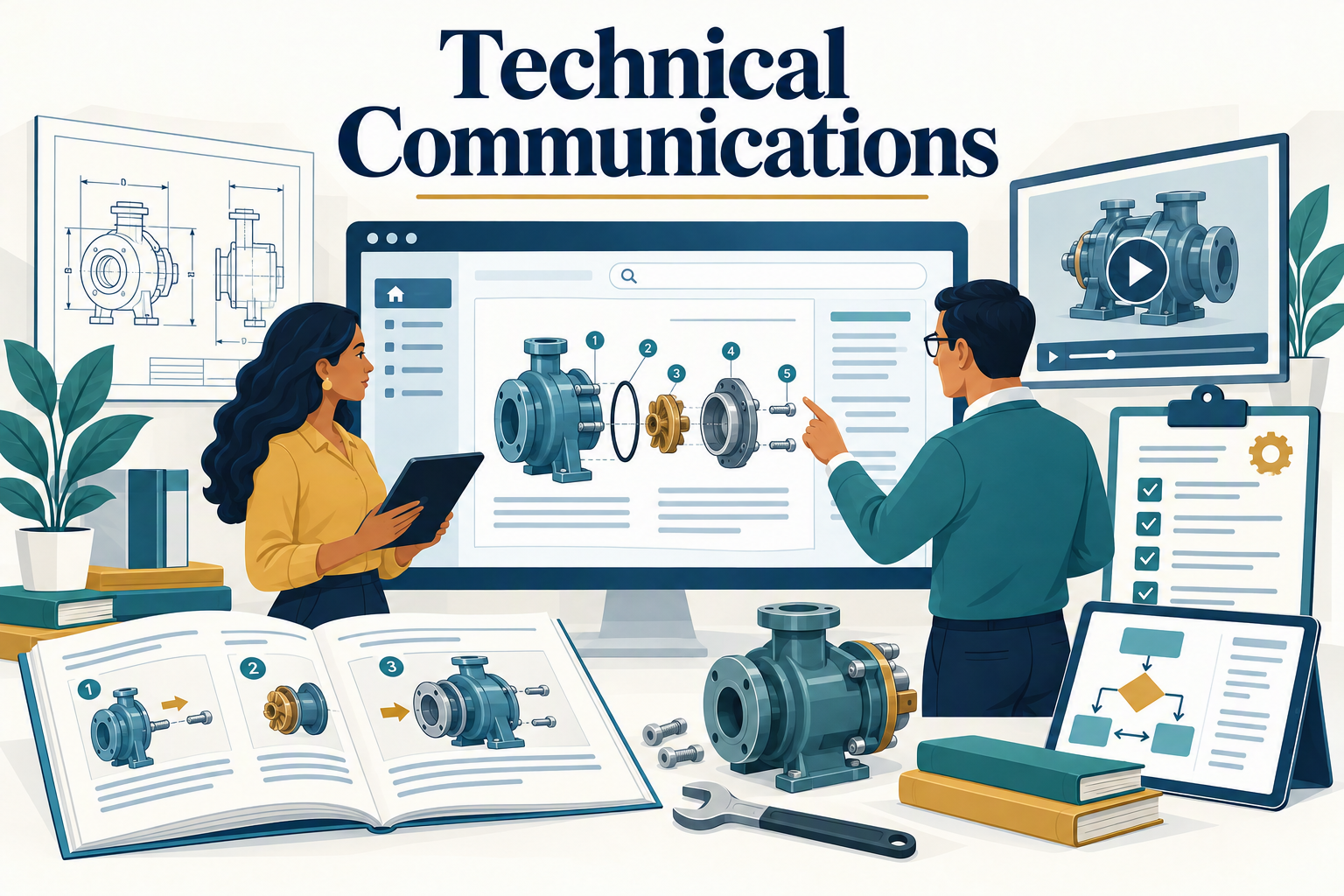
Technical communications focuses on helping people understand, use, build, maintain, and support products and services. This discipline is often the most visible expression of technical communication because it directly addresses users, operators, technicians, engineers, and service personnel. Technical communicators create user manuals, installation guides, maintenance procedures, troubleshooting documentation, online help systems, training materials, knowledge bases, API documentation, engineering specifications, service bulletins, and instructional videos.
Throughout a product’s lifecycle, technical communicators work closely with engineers, developers, product managers, manufacturing specialists, customer support personnel, and subject matter experts. They document design decisions, operational procedures, repair methods, safety requirements, configuration instructions, and best practices. Their objective is not merely to describe a product but to enable people to perform tasks correctly, safely, and efficiently. In industries such as healthcare, aerospace, information technology, manufacturing, energy, and transportation, high-quality technical communication improves productivity, reduce support costs, increase customer satisfaction, support regulatory compliance, and, in some cases, contribute directly to public safety.
Summary
Technical communicators serve as essential translators between specialized knowledge and practical application. Within corporate communications, they help organizations operate effectively through clear policies, governance documentation, training, and internal communications. Within marketing communications, they shape messages that inform and persuade customers while supporting organizational goals and brand reputation. Within technical communications, they create the documentation and instructional resources that enable products and services to be understood, used, maintained, and improved. Regardless of organizational size, from sole proprietorships to global enterprises, technical communicators transform information into a strategic asset, helping organizations function more efficiently, communicate more effectively, and achieve their objectives with greater consistency and confidence.